Search
Quicklinks
Search
Quicklinks
By Arin McKenna
July 17, 2026
Coriz-Romero credits her AA in Liberal Arts with helping her earn her bachelor’s degree and achieve career goals
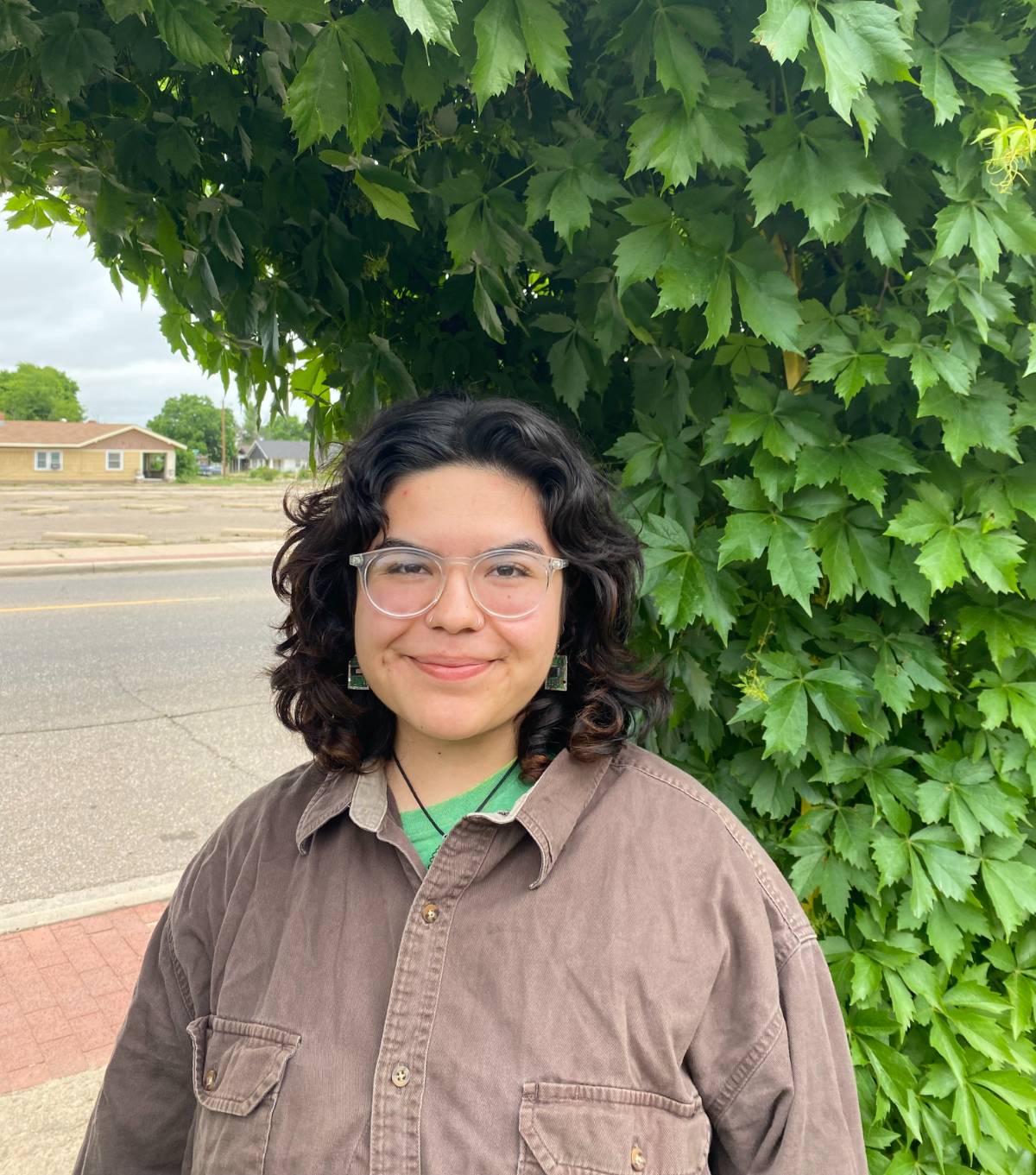
Aspen Coriz-Romero is a dual credit success story from Northern New Mexico College (NNMC). She graduated from Española Valley High School (EVHS) in 2020, earning an Associate of Arts in Liberal Arts degree from Northern at the same time. She went on to complete a bachelor’s degree at Southwestern University, receive a fellowship from the Institute for Policy Studies in Washington, D.C., and is now a fellow with the New Mexico Rural Library Initiative.
The dual credit experience was rewarding but challenging for Coriz-Romero, who was also working part time as she pursued her education.
 “Dual credit was a really excellent opportunity. It helped me find my path to an associate’s
degree and paid for my books and tuition,” Coriz-Romero said. “Sometimes it was a
little bit overwhelming, trying to find the balance between all of those things and
feel like I was also taking care of myself. That was an important learning experience
that I got pretty early on. I just had a really fantastic time in all the courses
I took while I was at Northern.”
“Dual credit was a really excellent opportunity. It helped me find my path to an associate’s
degree and paid for my books and tuition,” Coriz-Romero said. “Sometimes it was a
little bit overwhelming, trying to find the balance between all of those things and
feel like I was also taking care of myself. That was an important learning experience
that I got pretty early on. I just had a really fantastic time in all the courses
I took while I was at Northern.”
Although some dual credit classes are located at the high schools, Coriz-Romero was able to take all her dual credit courses on Northern’s campus, which became part of the experience for her.
“I spent a lot of time at Northern. It's a really wonderful campus. I love walking around, I love the library. It's one of my favorite places to just be. Sometimes I'll even go there just to get some work done,” Coriz-Romero said.
Northern’s Upward Bound (UB) program, which serves first-generation college-bound students from EVHS, was a critical part of Coriz-Romero’s journey. UB scholars participate in afterschool tutoring and extracurricular activities, college visits, Saturday Academy enrichment programs, dual credit coursework and college admissions seminars. The program helped Coriz-Romero hone her English and math skills, prepare to take the ACT college entrance exam and write essays for college admissions and scholarships. It also helped her get in touch with her own identity and what type of college was her best fit.
UB helped Coriz-Romero successfully apply for a Davis New Mexico Scholarship, which covers the full cost-of-attendance for first-generation students pursuing a bachelor’s degree. They require applicants to attend one of their partner institutions out-of-state, so Coriz-Romero chose Southwestern University in Georgetown, Texas. She graduated with a bachelor’s in Anthropology and Feminist Studies in 2024. She credits the dual credit program with helping her succeed at Southwestern by teaching her how to transition from high school to college classwork, how to engage in seminars and giving her the discipline to complete her assignments. The credits that transferred from Northern reduced her general education requirements, freeing her to take more classes related to her major.
Upon graduation from Southwestern, Coriz-Romero was selected for a fellowship with the Institute for Policy Studies (IPS), a progressive think tank in Washington, D.C. She spent a year working on their National Priorities Project, where they analyze the federal budget and spending priorities with a focus on economic justice. Coriz-Romero researched the federal budget and wrote blogs and op-eds on spending priorities, one of which was published by the Santa Fe New Mexican.
Coriz-Romero returned to New Mexico after the IPS fellowship ended, where she was hired as a fellow for the New Mexico Rural Library Initiative (NMRLI), which does rural library advocacy across the State of New Mexico. Her work involves research, meeting with rural library staff and advocacy. She helped conduct a statewide survey of small rural and tribal libraries and rural communities working to establish a library. The survey looked at the strengths of those libraries, such as the services and innovative programs they offer their communities, and the challenges they face.
That information was the foundation for a report to the legislature to advocate for more funding for the Rural Libraries Endowment Fund. NMRLI’s goal is to increase the endowment to $60 million, which would give every eligible library $45,000 a year to help them build capacity, give staff raises, hire new staff, make repairs to facilities and address other needs. This session they succeeded in increasing the endowment from $30.5 million to $32.5 million.
One of the most rewarding parts of Coriz-Romero’s job is visiting the libraries and seeing firsthand their role in the community and discussing their successes and needs with the staff. That can lead to helping them find ways to meet their goals or challenges. One memorable experience for Coriz-Romero was helping a librarian find the resources to install ADA accessible doors so disabled patrons could have the autonomy to enter without assistance.
“Being able to connect her with that information gave me a lot of satisfaction,” Coriz-Romero said.
Coriz-Romero was part of the team advocating for rural libraries during the 2026 legislative session. With the report in hand, Coriz-Romero spent eight days securing appointments with legislators or their staff. She also shared her personal interactions with those libraries with the legislators.
“It went really well for my first time being really proactive at a legislative session. It was definitely a learning curve,” Coriz-Romero said.
One of her favorite parts of the legislative session was networking with library staff at Library Legislative Day and learning about efforts to pass anti-censorship bills at the Freedom to Read New Mexico rally at the Capitol February 4, 2026.
“I got to connect with other libraries – not just rural libraries but with school librarians and academic librarians and librarians from larger places, and also with authors and advocates and people who love libraries,” Coriz-Romero said. “I also got to explore partnerships with other organizations during Health Day and Earth Science Day, discussing how to bring different types of programming to rural libraries. Those were really cool parts of the session, getting to connect with people and learn more about the issues and the work being done. It was really awesome.”
The liberal arts degree Coriz-Romero earned at Northern has helped her in all these endeavors.
“I think it really helped me refine myself as a writer and be able to think critically about texts. Studying liberal arts really taught me the value of having a very broad approach to learning and being able to kind of see how different topics interact with each other and are relational,” Coriz-Romero said.
Coriz-Romero also liked the experience of attending a smaller college where she was able to develop very close relationships with her peers and personal relationships with her professors. Southwestern is also a smaller college, but the experience was very different.
“Northern is really tight knit. You kind of know everybody, from the people that work in the different offices to the people that work in the café. That kind of closeness makes it a really different space,” Coriz-Romero said. “Being able to take classes with people not in my age group at Northern was also valuable. Southwestern had some nontraditional students, but not in the same way that I got to experience that at Northern, having peers from a lot of different walks of life, from a lot of different age groups with a lot of different experiences. I think that that was extremely valuable.”
Coriz-Romero is hoping to pursue a graduate degree, and working with the New Mexico Rural Library Initiative has helped her define her degree objectives.
“I am hoping to pursue a master's in library and information sciences and pursue a career in public librarianship,” Coriz-Romero said. “I've always had really deep appreciation for libraries and the critical role they play in fostering community and lifelong learning.”